Accident recovery in Frisco starts with a clear dispatch description. Share the road, direction, vehicle position, damage, officer instructions, and intended destination. Those details help the operator decide whether the call matches their equipment and capabilities.
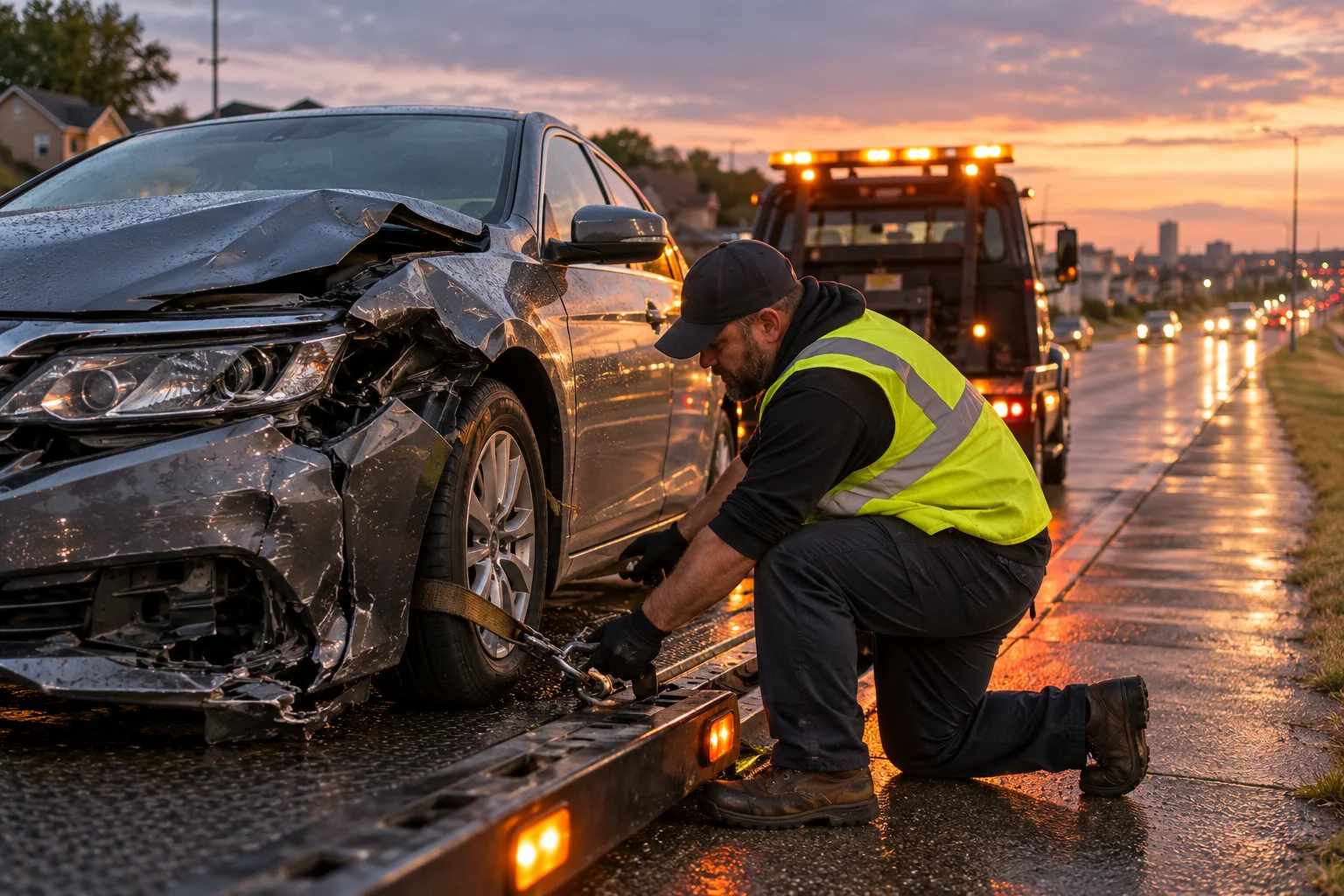
Follow instructions from the officer controlling the scene
An officer may be directing traffic or managing access around the crash. Follow that officer’s instructions before arranging movement of the vehicle. Don’t ask a towing operator to enter a controlled area without confirming authorization.
Tell dispatch whether an officer is still present. Explain whether the officer has already selected or contacted an operator. If you aren’t sure, ask the officer which company is authorized to enter the scene. Don’t assume that a separate operator can approach simply because you called one.
The same rule applies when another agency or roadway representative controls access. We don’t determine who controls a crash scene. We also can’t override instructions given at the location.
If you’ve been told that you may choose an operator, say that clearly. Quick Tow Dallas can then connect you with a licensed, insured operator for accident recovery and winch-out work. The operator will still need to confirm access, capability, destination, and price before accepting a consent call.
Keep the dispatch description factual. Useful details include:
- Whether an officer is present
- Whether traffic control is active
- Whether an operator has already been requested
- Where you’ve been told to wait
- Whether the vehicle can remain where it is
- Any access instructions provided at the scene
Don’t guess about rotation lists, roadway rules, or police procedures. Those details weren’t confirmed for this page. Ask the officer controlling the scene which operator is authorized and what you should do next.
Share the road, direction, and vehicle position
“Frisco” alone doesn’t give an operator enough location detail. Start with the road name and your direction of travel. Then describe where the vehicle stopped in relation to the roadway.
For a Dallas North Tollway call, say whether the vehicle is on the main lanes, a ramp, or a nearby service road. Include the direction of travel and the last exit or cross street you passed. If you’re near SH 121, give the same details. Don’t use “near the tollway” when you can identify the actual roadway.
Your vehicle’s position matters too. It may be beside the travel lanes, in a parking area, against a barrier, beyond the paved surface, or blocking part of a local street. Describe what you can see without contradicting an officer’s directions.
A useful dispatch statement sounds like this:
“I’m near the Dallas North Tollway, traveling north. The car is on the service road near a cross street. An officer is present, and the front wheel is damaged.”
Avoid relying only on a map pin. A pin can help, but the spoken description gives the operator context. Share a nearby business or building only when you can identify it accurately. Don’t invent an address from memory.
For a collision on a local Frisco street, provide both street names when possible. Also say which side of the intersection holds the vehicle. These details distinguish a roadside position from a car sitting in a nearby lot.
Our Frisco roadside assistance guide explains similar location details for breakdown calls. A crash needs additional information about damage, vehicle movement, and scene control.
Describe whether the vehicle rolls and steers
Crash towing in Frisco depends on the vehicle’s condition, not just its size. Tell dispatch what happens when the vehicle is placed in neutral, if that has already been checked without conflicting with scene instructions. Don’t attempt new tests merely to complete the call.
State whether the vehicle rolls and steers. Mention visible wheel damage, a flat tire, leaking fluid, loose body panels, deployed airbags, or parts touching the pavement. Describe only what you can observe. The operator decides what equipment and recovery approach may fit.
Wheel position can change the call. A wheel may point inward, sit under the vehicle, or remain locked. A car may look movable while its steering or suspension prevents a normal loading approach. Tell dispatch if the wheels appear straight, turned, missing, or visibly damaged.
Also share these basics:
- Vehicle year, make, and model
- Car, pickup, SUV, motorcycle, or another vehicle type
- Whether it’s carrying a trailer
- Whether all four wheels remain attached
- Whether the keys are available
- Whether the parking brake can be released
- Whether the vehicle is upright
- Whether another vehicle or fixed object limits access
Don’t diagnose mechanical damage. “The front passenger wheel is angled inward” is more helpful than guessing that an axle broke. The operator can evaluate the condition after receiving your description.
A damaged vehicle isn’t the same as a routine breakdown. Our emergency towing referral service covers disabled vehicles, while recovery calls may require a different operator assessment. You can also review our guide to accident recovery on Dallas freeways for a broader dispatch checklist.
DNT and SH 121 create different access details
Dallas North Tollway and SH 121 are distinct location references. For either corridor, dispatch needs the exact road, direction, and vehicle position. Don’t shorten the location to “DNT and 121” unless the vehicle is actually near that area.
On the Dallas North Tollway, clarify whether you’re on a main lane, entrance ramp, exit ramp, or service road. Say whether you were traveling north or south. If the crash occurred after leaving the tollway, give the local street instead of treating the tollway as your current location.
For SH 121, include your direction of travel and the nearest confirmed exit or cross street. Tell dispatch whether the vehicle remains on SH 121 or has reached another road, lot, or service area. A pin near the corridor can otherwise leave that distinction unclear.
Access may also differ between a vehicle beside moving traffic and one parked away from the roadway. Describe the current position without making assumptions about how the operator will approach it. The operator must decide whether the scene fits their equipment and instructions.
Frisco calls can also involve drivers who know a nearby shopping area but not the road name. If that happens, check the location shown by your phone and read the road label carefully. Confirm the direction based on your actual travel, not the way the vehicle now faces after a collision.
Don’t promise dispatch that a particular entrance is open or usable. Access conditions can change. Share what the officer tells you and what you can directly observe. Then let the operator confirm the approach before accepting the call.
Confirm who selected the operator and destination
Before accepting a damaged car towing call in Frisco, the operator needs to know who requested the tow. That may be you, an officer at the scene, another authorized person, or an insurer. Don’t assume that one request automatically replaces another.
Ask two direct questions: “Has an operator already been selected?” and “Am I allowed to choose one?” If an officer controls the scene, follow that officer’s answer. If another operator is already coming, tell dispatch before a second company is contacted.
Next, confirm the destination. You may want the vehicle taken to a repair facility, body shop, dealer, storage facility, home, or another approved location. Give the exact destination if you have it. Don’t say “the nearest shop” unless you’re prepared to let the operator identify available options.
Confirm that the destination can receive the vehicle. If you can’t verify access or acceptance, tell the operator that it remains unconfirmed. The operator can explain what information is still needed before accepting the trip.
Price is set by the operator, not Quick Tow Dallas. Ask the operator to confirm the price before the truck rolls on a consent call. Also explain whether an insurer or another party may be involved, but don’t assume that person will approve or pay the charge.
Texas towing operators and companies are licensed through the Texas Department of Licensing and Regulation. You can check an operator through the TDLR license search before handing over your keys. TDLR also publishes consumer information about towing.
Quick Tow Dallas is a dispatch and referral service. We don’t own recovery equipment, employ tow drivers, or operate an impound lot. The customer contracts directly with the operator who accepts the work.
When to call us
Call when a damaged vehicle needs a licensed towing operator and you’re authorized to arrange the tow. Have the road, direction, vehicle position, damage description, officer instructions, and destination ready. Call us at (469) 902-4411 and we’ll connect you with an operator who handles this work.