Call (469) 902-4411 and tell us where you are. We’ll connect you with a licensed tow operator working near your location anywhere in the Dallas metro, from the Mixmaster to Frisco to Oak Cliff, so you’re not waiting on a truck that has to cross the whole city to reach you.
Why “near me” actually matters in Dallas
Dallas isn’t one compact city, it’s a sprawling metro of over a dozen major highways and dozens of cities and suburbs stitched together. A truck that’s close to you in Plano isn’t going to help fast if you’re stuck in Duncanville. That’s why we work with a network of independent, licensed operators positioned across the metro’s core regions, from the inner core around Downtown and the Park Cities out through Collin County, the Denton corridor, and Irving and Las Colinas near DFW Airport. When you call, we route you to an operator who’s actually positioned to reach you quickly, not just whoever answers first.
What to have ready when you call
A few details speed everything up:
Your exact location. If you’re on a highway, the corridor name and the nearest exit or mile marker matter more than a street address. Dallas’s major arteries, I-35E Stemmons, I-30, I-635 LBJ, US-75 Central, the Dallas North Tollway, and the President George Bush Turnpike, all have long stretches where the closest cross street isn’t obvious. If you’re near a landmark interchange like the Mixmaster (I-35E/I-30) or the High Five (US-75/I-635), say so. Those are two of the busiest, most recognizable points in the metro and give the operator an immediate fix on your position.
What’s wrong with the vehicle. Flat tire, dead battery, overheating, accident, or it just won’t start. This helps the operator bring the right equipment.
Your vehicle’s size. A standard sedan, an SUV, or a full-size pickup or van changes what kind of truck gets sent.
A safe place to wait. If you can move the car fully onto the shoulder or into a parking lot, do it. If you’re stuck in a live travel lane, especially on a high-volume corridor like I-635 LBJ, stay in your vehicle with your seatbelt on and hazards on, and don’t attempt to push the car yourself.
Corridors where breakdowns are common
Certain stretches of the Dallas freeway system see a disproportionate share of breakdowns and crashes, and operators know them well:
- I-635/Skillman and I-635/Midway are two of the metro’s highest-volume crash points.
- The Mixmaster (I-35E/I-30 interchange) carries roughly 400,000 vehicles a day and is a frequent source of stall-related backups.
- The High Five (US-75/I-635), the tallest interchange in the country at 117 feet, is a major merge point for commuters heading between North Dallas and the LBJ corridor.
- I-20, I-30, and the TEXpress toll lanes on I-635 see steady breakdown volume from long-haul truck traffic passing through the metro.
If you’re stalled on any of these, being specific about which direction and which level of the interchange you’re on (if it’s stacked) helps an operator find you faster.
What happens after you call
Once we connect you with an operator, that operator handles the job directly: dispatch, arrival, and the tow itself. We don’t own trucks and we don’t perform the tow ourselves. The operator we send is an independent, licensed professional working in the Dallas market, and they’ll quote you directly for the specific job once they know your location and vehicle.
After-hours and weather situations
The line takes calls around the clock, which matters in a metro that sees real weather disruption. Dallas has been hit by ice storms severe enough to strand vehicles on I-35E and I-30 (the January 2023 ice storm caused widespread outages and crashes across North Texas), and by flash flooding that regularly closes underpasses in Dallas, Plano, Garland, and Irving. If you’re stranded during a weather event, get somewhere safe first, then call. An operator will reach you as conditions and road access allow.
Frequently asked questions
Does it matter which Dallas suburb I’m in? No. We work with operators across Dallas County and the surrounding suburbs, from Irving and Las Colinas to Collin County communities like Plano and Frisco to the Denton corridor cities like Carrollton and Lewisville.
What if I’m stuck on a tollway like the Dallas North Tollway or PGBT? Give us the tollway name and your direction of travel. Operators are familiar with tollway shoulder access and will meet you at the nearest safe pull-off point.
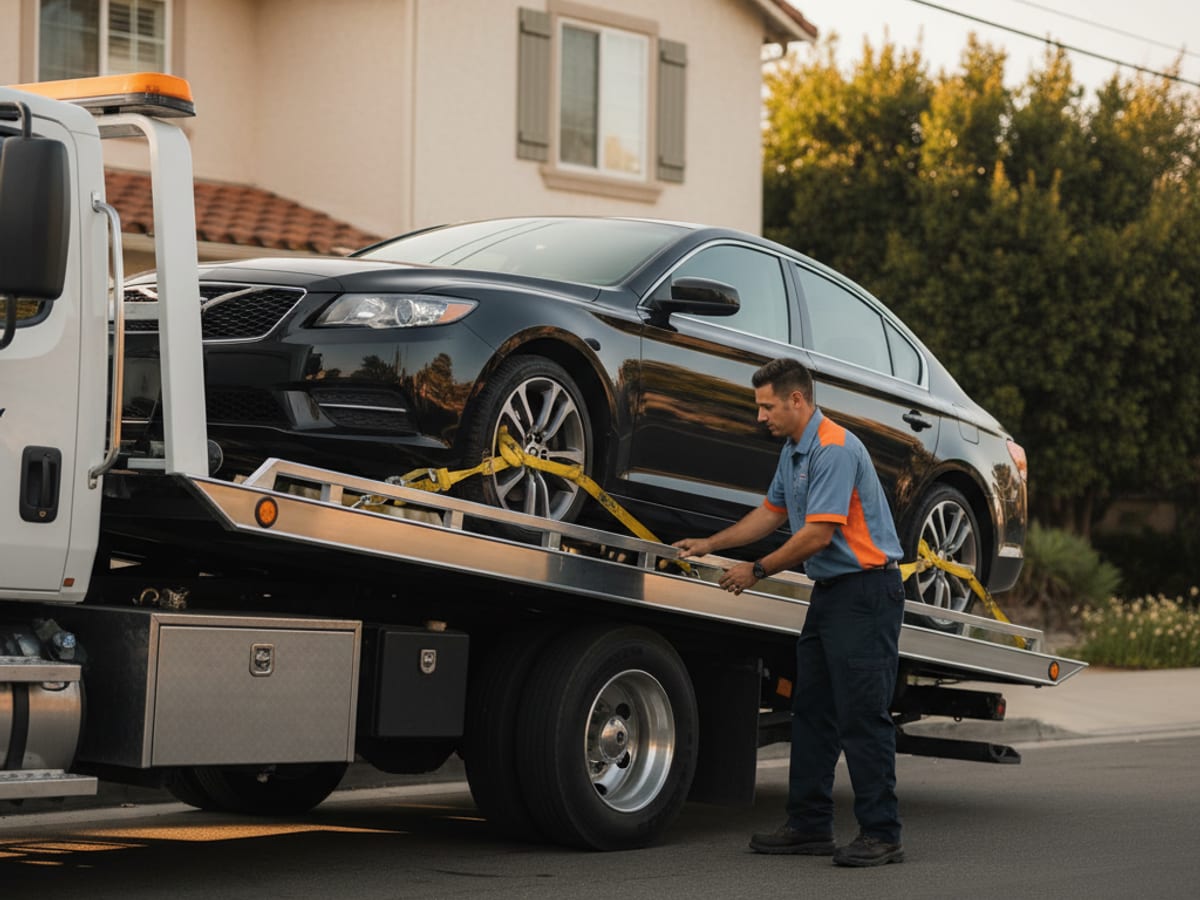
Can you help with a flatbed tow for a larger vehicle? Yes. Tell us your vehicle type when you call, whether it’s a full-size truck, van, or something needing a flatbed, and we’ll connect you with an operator who has the right equipment.
What if my car broke down at an event, like the State Fair or a game at The Star in Frisco? Give us the venue and your parking location. Event traffic can add time, so the more specific you are about where you’re parked, the faster an operator can find you.
Stuck anywhere in the Dallas metro, call (469) 902-4411. We’ll get you connected with a licensed local operator who can reach you and get you back on the road.