Searching for roadside assistance near me usually means the car has already stopped cooperating. Share your exact location, vehicle details, symptoms, and safe pickup point so dispatch can find a suitable licensed, insured operator. Quick Tow Dallas connects you with that operator, who performs the work and sets the price.
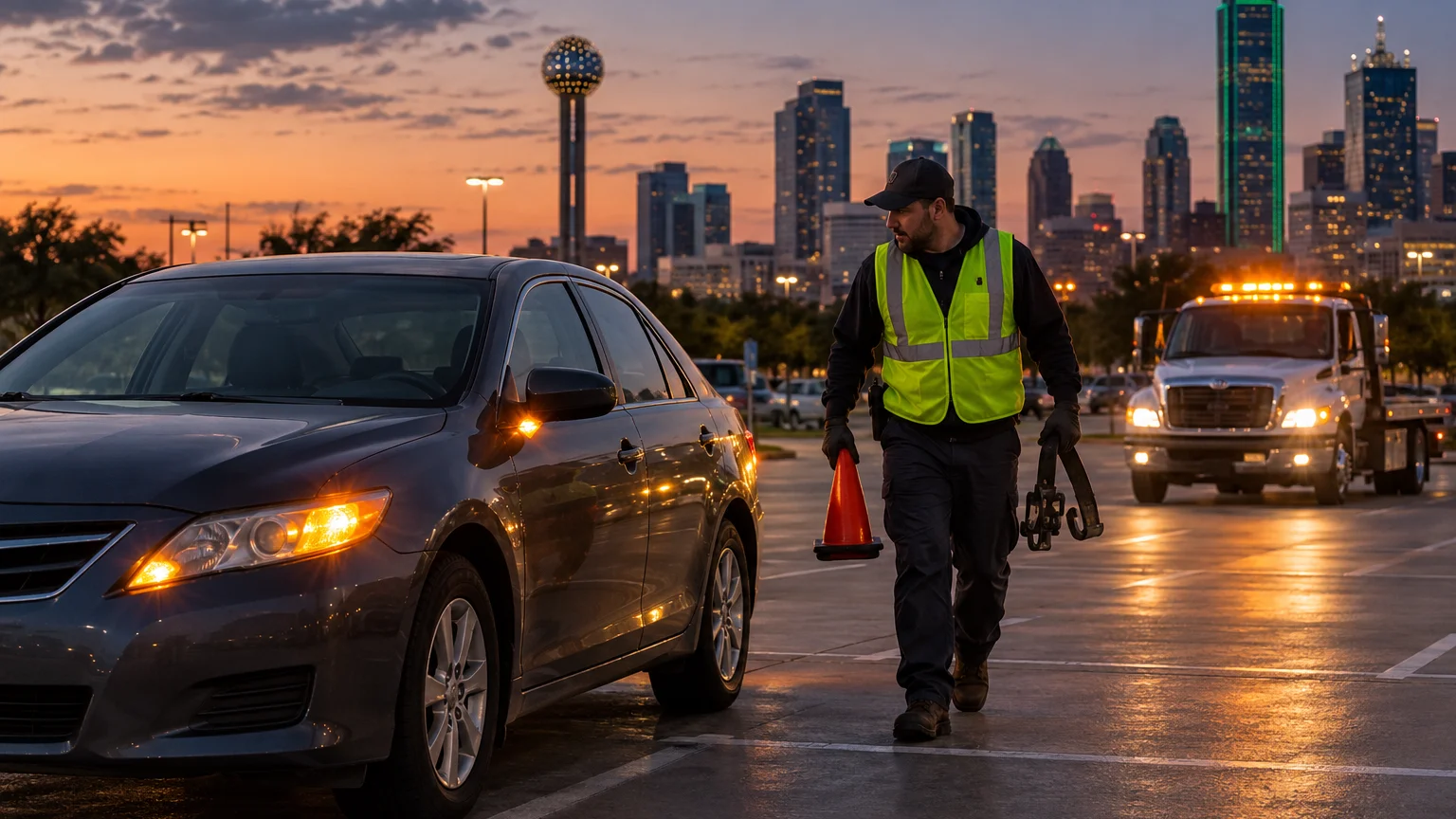
Tell dispatch where the car is and what failed
Start with your location, not your home address. Dispatch needs the disabled car’s current position. A dropped map pin often helps, especially inside a large parking lot or garage.
On a Dallas freeway, name the road and travel direction. Include the nearest exit, cross street, or visible landmark. “Northbound US 75 near the Mockingbird Lane exit” is far more useful than “near Downtown.” The same applies along I-635 LBJ, I-35E Stemmons, I-30, I-20, Loop 12, and the Dallas North Tollway.
Then describe the vehicle. Give the year, make, model, and color. Mention whether it’s a sedan, pickup, SUV, motorcycle, or larger vehicle. Tell dispatch if it’s an electric vehicle or has modified suspension. Those details help identify an operator suited to the job.
Describe what happened in simple terms. Useful details include:
- The engine won’t turn over.
- The lights work, but the starter only clicks.
- A tire is flat or damaged.
- The vehicle overheated.
- The transmission won’t shift.
- The car starts but won’t stay running.
- The vehicle struck something or left the pavement.
Don’t diagnose a mechanical failure if you aren’t sure. Explain what you heard, smelled, saw, or felt. Dispatch can pass those details to the operator.
Our roadside assistance service is a referral service. We answer the line and connect callers with operators in our network. The customer contracts directly with the operator who accepts the call.
When a jump start or tire call may be enough
A roadside service call may fit when the vehicle can safely continue after one limited problem is addressed. A weak battery or accessible flat tire can fall into that category. The operator still needs enough information to determine what equipment the call requires.
For a possible battery problem, explain what happens when you turn the key or press the start button. Mention whether the dashboard lights appear. Tell dispatch if you heard clicking, noticed dim lights, or left an accessory running. Those observations don’t confirm the cause, but they help describe the situation.
For a tire call, identify the damaged wheel if possible. Tell dispatch whether the vehicle has a usable spare. Also mention wheel locks, visible rim damage, or more than one flat tire. If the car sits low to the ground, say so before dispatch.
Location changes the call. A flat tire in an Oak Cliff shopping-center lot differs from one on an I-635 shoulder. A car inside an Uptown garage may face clearance, ramp, gate, or access limits. Share those details before an operator accepts the job.
Don’t assume roadside work will make the car safe to drive. A tire with wheel damage may need more than a change. A battery problem could also involve another vehicle system. The operator can assess the immediate roadside request and explain whether towing is the better option.
Drivers without a motor-club plan can also read our guide to roadside assistance without AAA in Dallas. It covers that specific situation without changing the basic information dispatch needs.
When the car needs a tow instead
A tow may be appropriate when the car can’t move safely after a basic roadside attempt. It may also be needed when the problem involves steering, braking, wheel damage, overheating, collision damage, or a vehicle that won’t remain running.
Tell dispatch if the car can roll, steer, and shift into neutral. Mention whether the parking brake releases. Don’t force the vehicle to move just to answer those questions. State what you know and let the operator determine the proper loading method.
An operator also needs to know the destination. That could be a repair shop, dealership, home, or another location that accepts the vehicle. Confirm the destination’s address and access conditions before pickup when possible. A locked shop lot creates a different problem than an open residential driveway.
Vehicle position matters too. A car stopped straight in a parking space is different from one pressed against a curb. Tight corners, low ceilings, steep ramps, locked gates, and blocked wheels can affect which operator is suitable.
If the vehicle is creating an urgent roadside problem, ask about emergency towing. The phrase describes the situation, but it doesn’t guarantee an arrival time. Ask the operator for a current arrival estimate after the call is accepted.
You can also review what to share when searching for a tow truck near you in Dallas. That guide focuses on tow dispatch, while this page helps separate a roadside request from a tow.
Dallas shoulders, garages, and parking lots
Dallas breakdown locations aren’t interchangeable. Road design, access, and jurisdiction shape what dispatch needs from you.
On I-635 or US 75, start with direction and the nearest exit. Say whether the car is on the right shoulder, left shoulder, ramp, frontage road, or travel lane. The High Five can make vague location descriptions especially unhelpful because several road levels meet there.
Along I-35E Stemmons and I-30 near Downtown, distinguish the main lanes from frontage roads and connecting ramps. Around the Mixmaster, include the road you entered from and the road you were trying to reach. A map pin can clarify which level or connector holds the vehicle.
Uptown and Downtown garages create different access concerns. Tell dispatch the garage name or street address, floor, clearance sign, entrance location, and whether a gate requires validation. Don’t describe a garage call as ordinary parking-lot service. The operator needs to know about restricted height and turning space before accepting it.
In Oak Cliff, Pleasant Grove, West Dallas, and East Dallas, many calls begin in apartment lots, retail centers, or residential streets. Identify the building, store, lot entrance, or nearest cross street. Say whether another vehicle blocks access.
North Dallas also reaches toward Richardson and the Collin County corridor. Plano and Frisco aren’t in Dallas County. Farther northwest, parts of the corridor enter Denton County. Give the actual city instead of saying only “Dallas.” That prevents dispatch from routing the request based on the wrong jurisdiction or side of the metro.
If you’re in immediate danger, prioritize getting away from moving traffic when you can do so safely. Tell dispatch plainly if the vehicle is exposed to traffic or can’t be reached from a normal parking area.
What the operator confirms before dispatch
The operator needs to confirm the requested service, vehicle, location, access, and destination. Answering those points before the truck rolls reduces confusion at pickup.
Expect questions about the vehicle’s size and condition. The operator may ask whether it can roll, steer, brake, or enter neutral. They may also need to know about all-wheel drive, low clearance, damaged wheels, collision damage, or an electric drivetrain. Answer only what you can observe.
Confirm who will meet the operator and where that person will wait. If you’ve left the vehicle, explain where the keys are and who can authorize service. Don’t assume an operator can enter a gated lot, garage, or repair facility without permission.
The operator sets the price, not Quick Tow Dallas. Ask the operator to confirm the price before the truck rolls. Also confirm the service included, payment method, pickup location, and towing destination. If the conditions change after arrival, ask how that affects the work before authorizing anything further.
You can verify a towing operator through the TDLR license search. TDLR regulates Texas towing operator and company licenses. Quick Tow Dallas doesn’t hold a tow license because we don’t perform the tow.
Keep your phone available after the request. The operator may need clarification about a garage entrance, ramp, frontage road, or parking-lot access point. If you move the vehicle or leave the original meeting place, update dispatch so the location information stays accurate.
When to call us
Call when a roadside problem can’t be handled safely where the vehicle sits, or when the car may need a licensed towing operator. Share your location, vehicle, symptoms, and access details before dispatch.
Call us at (469) 902-4411 and we’ll connect you with an operator who handles this work.