A tow truck request in Richardson starts with a precise location. The right road, direction, access point, and vehicle details help dispatch route the call correctly. That matters whether you’re beside US 75 or parked off Belt Line Road.
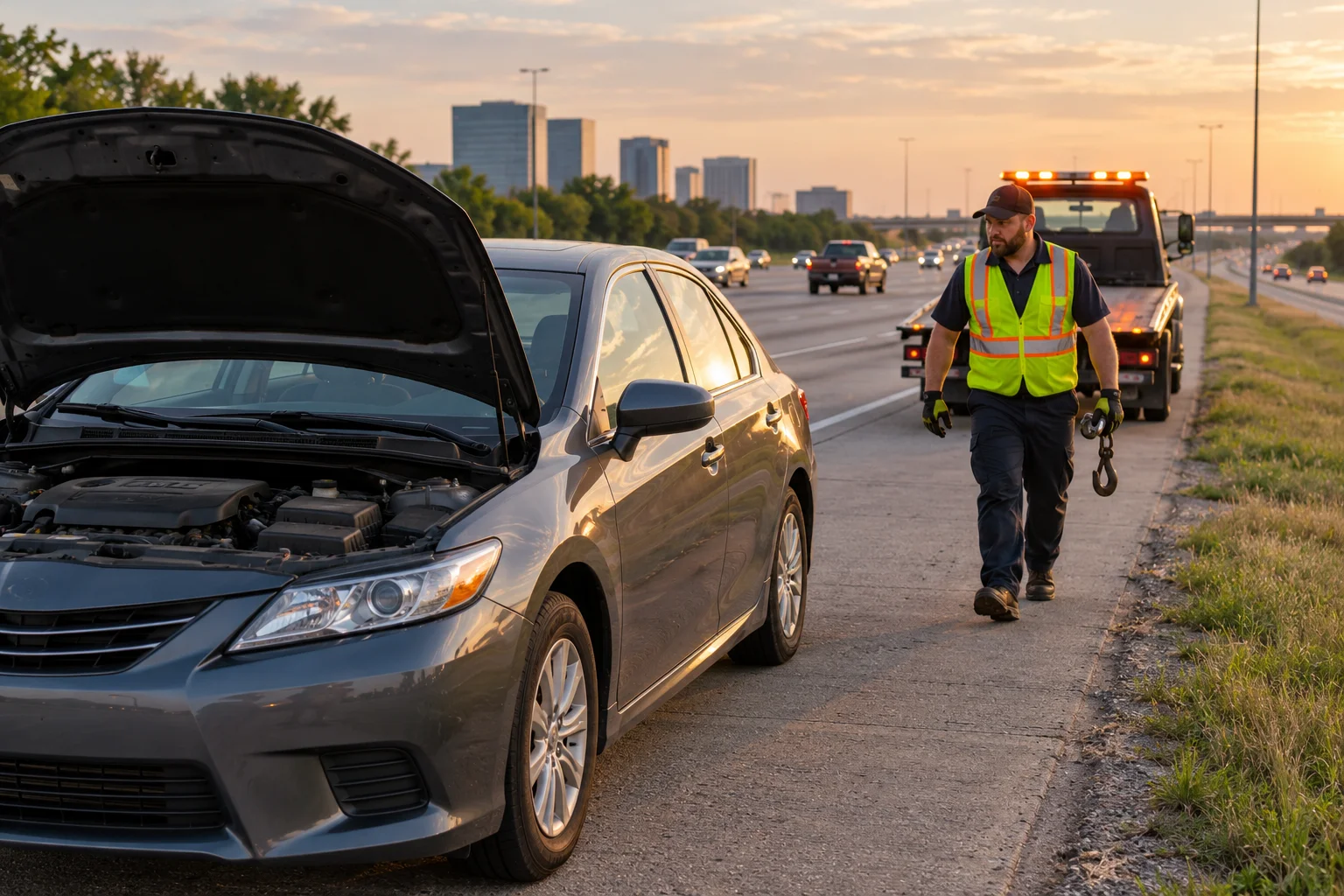
Share the road, direction, and nearest safe access point
Start with the road you’re on, then add your direction of travel. “US 75 in Richardson” leaves important gaps. Dispatch also needs northbound or southbound, the nearest exit, and whether you’re on the main lanes or frontage road.
If you’re off the highway, share the nearest cross street. A business name can help, but don’t rely on it alone. Shopping centers and office campuses often have several entrances. Give the street address when you can. Then explain which driveway reaches your vehicle.
A dropped location pin is useful. Read the displayed address aloud too. Pins can land behind buildings, across divided roads, or inside large parking areas. Confirm the city shown on your phone, especially near Richardson’s northern and southern edges.
Tell dispatch whether the vehicle is in a travel lane, on a shoulder, inside a garage, or in a parking space. Mention gates, height limits, narrow entrances, and locked access. Don’t guess whether a truck can fit. The operator decides what access and equipment the job requires.
Your nearest safe meeting point may differ from the vehicle’s location. Make that distinction clear. For example, you might be waiting inside a nearby business while the disabled car remains outside.
For an active breakdown or collision scene, our emergency towing service page explains the referral process. Quick Tow Dallas dispatches calls to licensed, insured operators. We don’t own trucks, employ drivers, or perform the tow.
US 75 and local streets need different location details
US 75 runs through Richardson, but a highway call needs more detail than a local-street request. Direction, exit, frontage road, and nearby cross street help distinguish several possible pickup points.
Say whether you’re on the main lanes, an entrance ramp, an exit ramp, or the frontage road. Don’t describe every nearby landmark. Give the clearest two or three details you can verify from signs or your map.
President George Bush Turnpike calls need the same care. A location near the interchange with US 75 isn’t precise enough by itself. Tell dispatch which roadway you’re actually on and your direction. If you’ve exited, name the first street or driveway you reached.
Belt Line Road and Greenville Avenue present different location problems. On these streets, a full address and cross street usually describe the vehicle better than a highway exit. Add the name of the parking lot or building only as supporting context.
If you’re inside an office complex, explain where the entrance sits. “Behind the building” isn’t enough when several buildings share internal drives. A building number, garage level, or marked entrance gives the operator a better starting point.
Don’t move the vehicle solely to simplify the description. If you’re unsure whether it can be moved safely or legally, ask the operator. No Richardson-specific roadway procedure for disabled vehicles was confirmed in the approved information for this page. For instructions at an active roadway incident, follow directions from the responding authority.
Drivers farther north may also find our Plano and North Dallas dispatch guide helpful. For broader search guidance, see how to request a tow truck near Dallas.
Describe the vehicle and what stopped working
Dispatch needs more than the vehicle’s color. Give the year, make, model, and body style when known. Say whether it’s a sedan, pickup, SUV, motorcycle, van, or another vehicle type.
Tell us what happened in plain words. Useful descriptions include:
- The engine shut off and won’t restart.
- A tire is flat, and no usable spare is available.
- The battery appears dead.
- The vehicle starts but won’t move.
- A wheel looks damaged or sits at an unusual angle.
- The vehicle was involved in a collision.
- The keys are locked inside.
- The vehicle is stuck outside the traveled roadway.
Don’t diagnose a mechanical failure if you aren’t sure. Describe what you saw, heard, or felt. The operator can decide what service may fit after reviewing those details.
Also report anything affecting loading or movement. Tell dispatch if the vehicle is all-wheel drive, has missing wheels, won’t shift into neutral, has locked steering, or carries a trailer. Mention low clearance and visible body damage. Don’t crawl beneath the vehicle to inspect it.
Not every disabled vehicle needs towing. A battery problem, lockout, or ordinary tire issue may fit roadside assistance in Richardson. Dispatch can share the situation with an operator, but the operator determines whether roadside work is appropriate.
If towing is needed, provide the intended destination. That might be a repair facility, dealership, home, or another location chosen by the vehicle owner. Confirm that the destination can receive the vehicle. Quick Tow Dallas doesn’t control another business’s hours, access rules, or acceptance policies.
Separate a roadside request from an impound question
A disabled vehicle and an impounded vehicle require different calls. For your own breakdown, dispatch needs the vehicle’s current location, condition, access details, and destination. For an impound question, first determine who removed the vehicle and where it was taken.
Richardson contracts Signature Towing for municipal impound service. The confirmed facility address is 1204 Municipal Drive in Plano. Before traveling there, confirm directly with the facility that it has your vehicle. Also ask what current documents, payment methods, and release steps apply. Those details weren’t confirmed for this page, so they shouldn’t be assumed.
Don’t use City of Dallas impound instructions for a vehicle removed in Richardson. Dallas operates a separate system. The city where the tow began matters, as does the reason for removal.
For a private-property tow, check the signs at the property entrance and any notice provided. Photograph the signs and parking location when practical. Texas private-property towing signs have statewide requirements under Occupations Code Chapter 2308, but the exact facts of a removal must be reviewed individually.
For consumer information about towing, use the Texas Department of Licensing and Regulation towing page. If you’re uncertain about a company’s status, search the TDLR license database before handing over your keys.
Quick Tow Dallas doesn’t operate an impound lot and can’t release an impounded vehicle. We can route a new roadside towing request, but questions about an existing impound belong with the storage facility or responsible authority.
What the operator confirms before accepting the call
The operator reviews the information provided through dispatch. Expect questions about the pickup point, vehicle, problem, access, destination, and person authorized to release the vehicle.
Give your callback number and the name of the person meeting the driver. If you won’t remain with the vehicle, say so before dispatch. The operator may need to confirm how the keys will be transferred and who can approve the work.
The operator also determines whether the requested service fits the situation. A roadside request can change after the vehicle is inspected. For example, a reported battery problem may involve another mechanical issue. A parked vehicle may have damage that changes the loading method. The operator makes that assessment, not Quick Tow Dallas.
Ask the operator these questions before the truck rolls:
- What service are you accepting?
- What pickup and destination addresses do you have?
- What vehicle description did you receive?
- Who will perform the work?
- What price does the operator quote?
- Are there conditions that could change that price?
- What arrival estimate can the operator provide?
Quick Tow Dallas doesn’t set the price. The operator quotes and confirms it. No verified Richardson-specific towing rate was available for this page, so we won’t publish an estimate. Ask the operator about the full charge before authorizing dispatch.
Texas regulates towing through TDLR. You can verify a towing operator through the state license search linked above. Keep the operator’s name, quoted service, and destination with your call notes.
Clear details reduce avoidable back-and-forth. They don’t guarantee an arrival time or equipment assignment. Availability, traffic, roadway access, and the actual vehicle condition can affect what the operator accepts.
When to call us
Call when a disabled vehicle in Richardson needs a licensed towing operator, or when roadside service can’t resolve the problem. Have the road, direction, access point, vehicle description, and destination ready. Call us at (469) 902-4411 and we’ll connect you with an operator who handles this work.